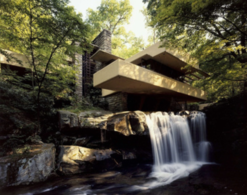
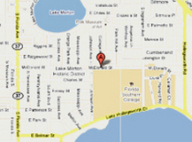
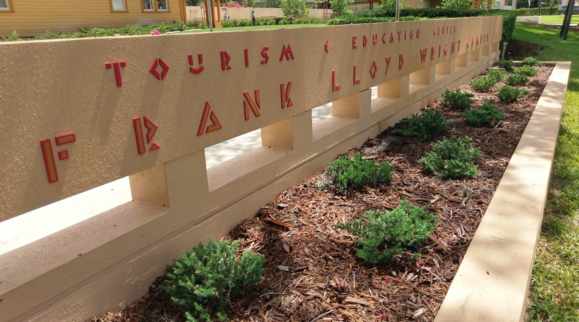
Observations, photographs, and video of the construction of a Frank Lloyd WrightUsonian house which serves as the Sharp Family Tourism and Education Center on the campus of Florida Southern College, located in the South Lake Morton Historic District of Lakeland, Florida. Follow this link for visitor information.
The whole difference between construction and creation is exactly this: that a thing constructed can only be loved after it is constructed; but a thing created is loved before it exists. | G.K. Chesterton (1874-1936)
By Michael Maguire | February 26, 2016 at 08:39 PM EST | 1 comment
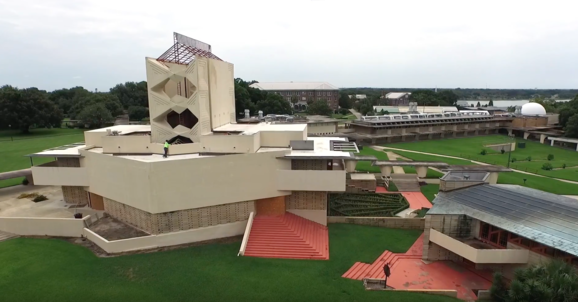
Al Garcia, a producer with Polk County TV has just released his sparkling video and says, "come and encounter Frank Lloyd Wright Architecture at Florida Southern College, which is now a National Historic Landmark. Be intrigued by the interesting history, by inspired by the artistic structures, see and learn the college's unique structural evolution post Frank Lloyd Wright."
By Michael Maguire | January 16, 2016 at 10:48 AM EST | No Comments
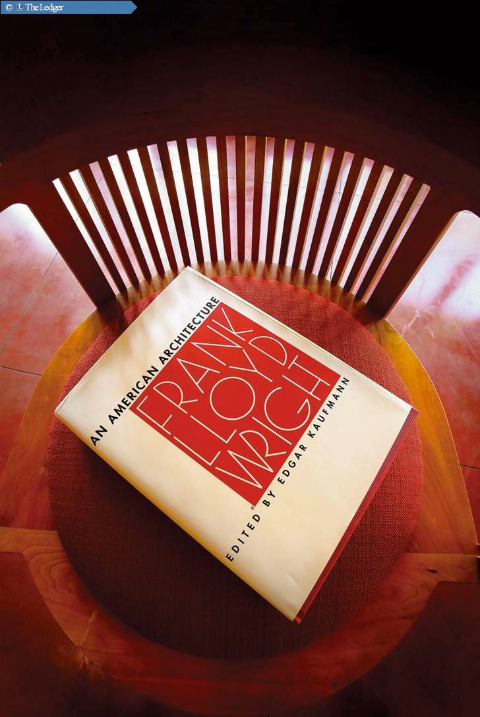
The current issue of The Journal of the Taliesin Fellows features a comprehensive look at "organic architecture in Florida" and includes photos of the Florida Southern College campus, an article by Jeff Baker, who was the supervising architect for the Usonian house and is leading the restoration work currently underway on the original buildings, and a cheerful review of the book produced from this blog. Click here for a PDF version of the review.
By Michael Maguire | October 04, 2015 at 07:54 AM EDT | No Comments
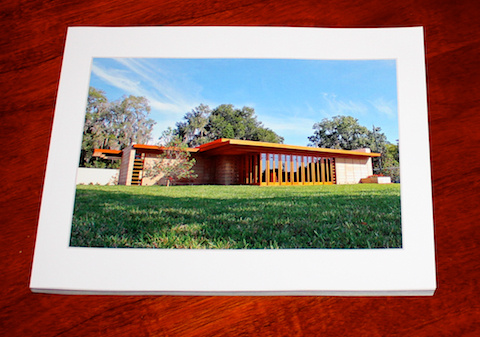
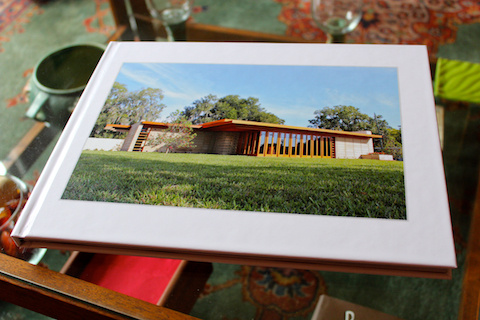
Well this has been a long time coming. Complications arising from the uniqueness and limitations of Apple's Aperture application made compiling the book into a single volume using the original page designs a slog through the digital printing landscape. However, thanks to a tip from Ken Uracius, we were able to work with Tri-State printing in Hagerstown, Maryland, and finally produce this soft-cover version which will be available for your library for the exchange of a nice, crisp hundred-dollar bill (plus shipping and tax). Email directly to michael@themaguiresoflakeland.com
By Michael Maguire | March 01, 2015 at 01:11 PM EST | No Comments
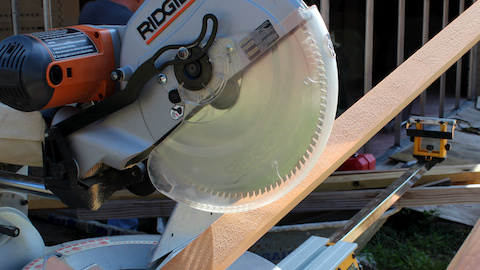
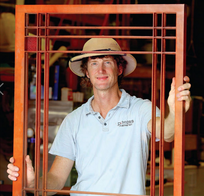
No matter how sophisticated or amazing advancing technology becomes, some things still require hard tools in the skilled hands of a human being. And all manner of useful things that we consider to be "off the shelf" were in fact produced in just such a way. The wooden features of the Usonian were designed by Wright, but the are real because of Tom Sharrett.
By Michael Maguire | February 08, 2015 at 09:46 AM EST | No Comments
LAKELAND (FOX 13) -
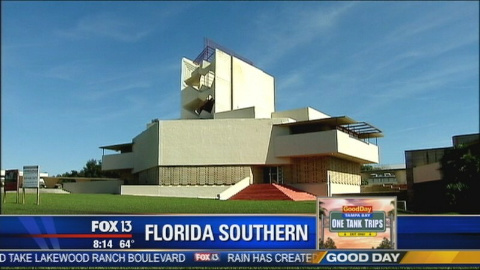
The campus of Florida Southern College in Lakeland -- in the architectural world, it's known as "Child of the Sun." That's the name given to the group of buildings here designed by architect Frank Lloyd Wright.
The largest collection of Frank Lloyd Wright architecture on one site, for one client -- 13 structures in all.
And while most of them have been here for years, one is new: A 1939 design of a two-bedroom, one-bath home being used as faculty housing. The plans were found in the archives at Florida Southern but it had never been built.
By Michael Maguire | December 07, 2014 at 01:17 PM EST | No Comments
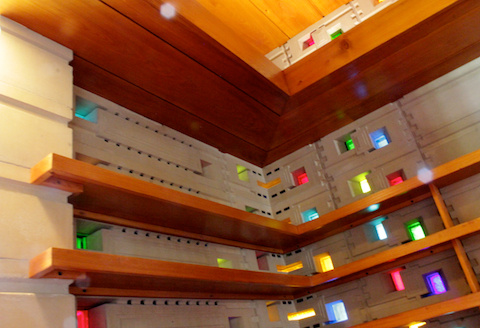
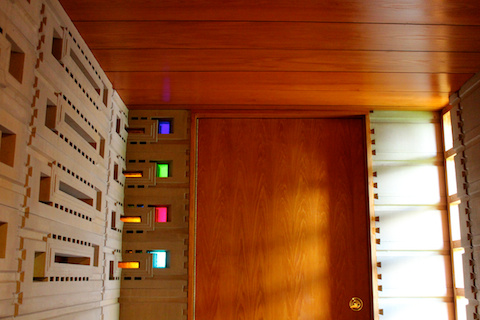
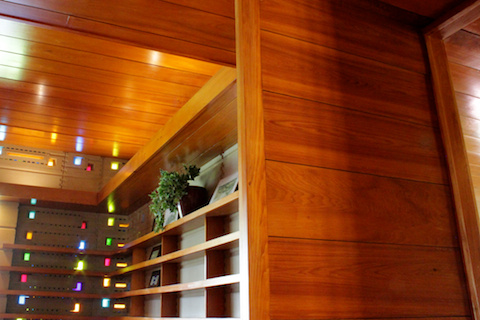
I hardly think Frank Lloyd Wright had Christmas in mind when he designed the perforated blocks that decorate the Florida Southern campus buildings. But he clearly knew that light, which he used so effectively in his work, was a coat of many colors that would brighten and soften the wood and stone and steel that made up the rest of his material list.
By Michael Maguire | November 23, 2014 at 09:09 AM EST | No Comments
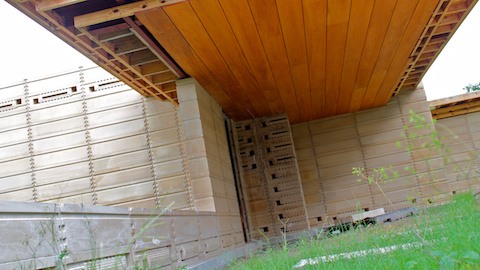
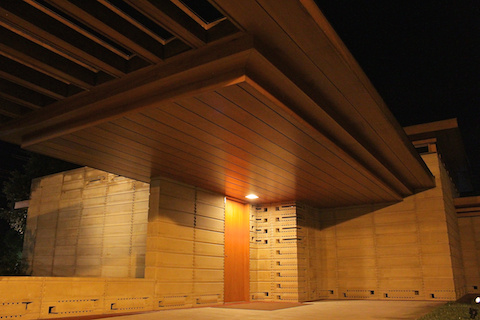
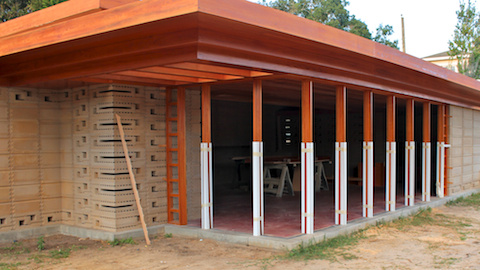
The southern cypress seems to generate a warmth you can almost feel as you arrive. The low, multi-level ceiling of the carport ( a Wright innovation ) offers a cozy refuge and beckons you in. Doesn't it?
By Michael Maguire | November 09, 2014 at 09:26 AM EST | No Comments
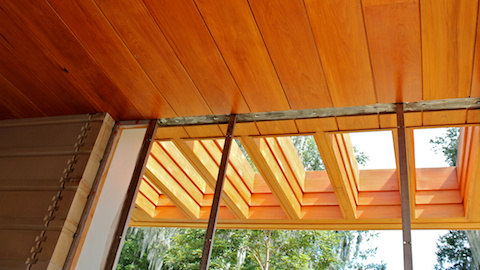
Well, no, of course. It's neither rubber nor road, but the principle is the same here, where the cypress meets the blocks. Where the rubber does meet the road is where the reality of a concept is proven and the test truly begins. In the case of the Usonian House, these delicately and precisely cut window moldings are made to meet the complex geometric relief patterns of the delicately and precisely fabricated concrete blocks that form the identity of the house. Nothing less than perfection could succeed. Next time you're there, give it a moment.
By Michael Maguire | October 26, 2014 at 08:00 AM EDT | No Comments
Consider the humble concrete block.
Then consider, and then learn, what the modern world would, and would not, be without it. From Rome to home, the history of concrete tells the tale of civilization. The Usonian House mason, Ken Uracius, poured his art and soul into developing the best compound to achieve precise color, strength, and durability. Learn more at http://en.wikipedia.org/wiki/Concrete
By Michael Maguire | September 07, 2014 at 08:16 AM EDT | No Comments
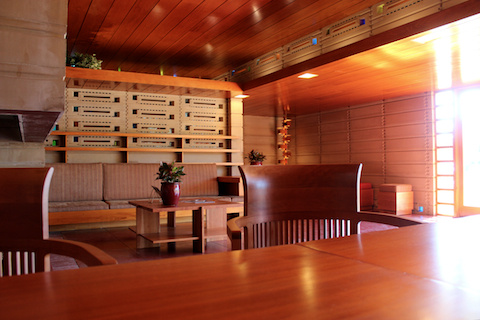
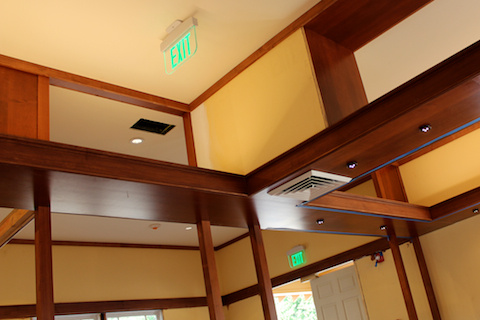
Wright wanted people to live in his structures, to be "alive" in them, not merely to be present or to just "come home" to them. Unless you deliberately look up, you are unlikely to see or pay much attention to your ceiling, but Wright would have none of that. He surrounds you with the natural elements in all directions.
By Michael Maguire | August 31, 2014 at 10:19 AM EDT | No Comments
Ledger writer Gary White and photographer Ernst Peters have produced an exquisite pair of articles on the Usonian House and Tom Sharrett whose company fabricated and installed all of the cypress features and accents. The work appears in the current issue of PolkLife. The online versions can be found here and here.
By Michael Maguire | August 24, 2014 at 05:21 PM EDT | No Comments
We are now acquiring "portrait" images for the book. Each visit yields new instances of the stark and authentic beauty of the construction, its materials and its crafters. More to come.
By Michael Maguire | June 29, 2014 at 10:46 AM EDT | No Comments
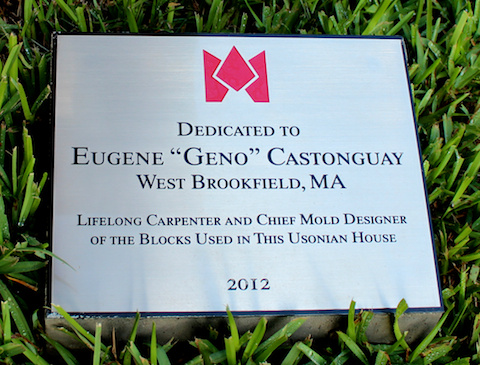
The college has now installed a permanent plaque in honor of "Geno" Castonguay, a master carpenter working in North Brookfield Massachusetts, who created all of the complex molds that were used to fabricate the 47 different blocks designed for the house.
Geno died in 2012 at the age of 80. As you can see from the video of our visit to North Brookfield, He was vibrant and effective and very much at ease executing his highly refined craft, Visit "The Blocks" for the whole story.
The plaque lies at the northeast corner of the entrance area, in easy view of all visitors.
By Michael Maguire | May 04, 2014 at 10:50 AM EDT | No Comments
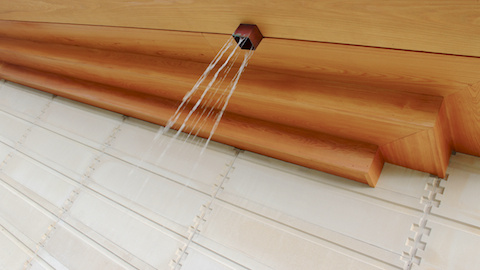
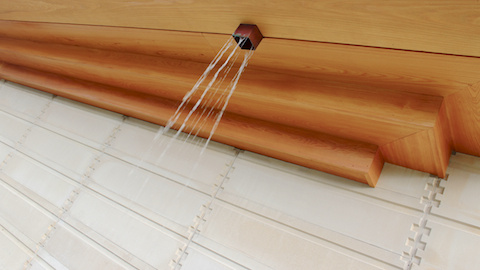
While the roof workers were pressure cleaning the roof we got a chance to see a nifty design feature that we weren't expecting: the roof drain that sits over the planter at the southeast corner of the house. No need for a watering can in the rainy season, eh?
By Michael Maguire | November 18, 2013 at 11:54 AM EST | No Comments
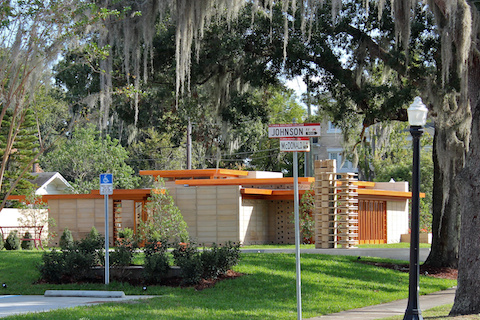
It will hardly ever be just another house in the neighborhood, but on this serene, brightly-lit November morning, it seemed to be what Wright intended - a natural part of the landscape. See more in the November Gallery.
By Michael Maguire | November 01, 2013 at 08:00 PM EDT | 2 comments
The moment has arrived.
With the exception of some minor details, the house is now complete, and the principles of its construction are ready to sit and savor the accomplishment. There will be more to do, and there will be adjustments and refinements - more like "polishing" what's already been done.
This blog will continue to follow and report on the life and times of the house, but as today's entries are posted in the November Gallery, we too are ready for a brief respite and some reflection of our own. It has been a complete pleasure and a lucky circumstance that brought us the opportunity to meet and come to know such fine and dedicated artisans, craftsmen, and professionals.
Next up are an interview with Tom Sharrett, the installation of the last of the glass inserts and more of October's push to the finish. Check back often.
By Michael Maguire | October 29, 2013 at 08:50 AM EDT | No Comments
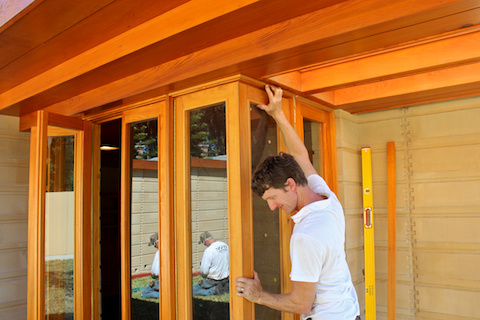
Tom Sharrett works on the final fitting adjustments for the bedroom's corner doors. This pair, and two other sets like them, open like the french door pairs but must meet and latch to each other with a highly-specialized design. See more in the October Gallery.
By Michael Maguire | October 23, 2013 at 08:05 AM EDT | 1 comment
The historic bungalow that will become the college's gift shop is being restored to its original condition on the outside, but is definitely taking on a Frank Lloyd Wright look inside. More to come of course, but there's already a lot to see in the October Gallery.
By Michael Maguire | October 21, 2013 at 09:39 PM EDT | No Comments
The countdown to the premiere has moved inside ten days. It's starting to feel a little like working on an engine while it's running. Details change by the hour. Check the burgeoning October Gallery to see what we mean.
By Michael Maguire | October 17, 2013 at 02:49 PM EDT | No Comments
Please pardon a brief building-the-Usonian-House-project timeout for news of a buildingtheusonianhouse.com update. As we approach the "premiere" of this amazing undertaking, we thought it would serve us all to refresh and re-construct this site to take advantage of improved technology and experience gained over the course of two-and-a-half years as a "sidewalk superintendent".
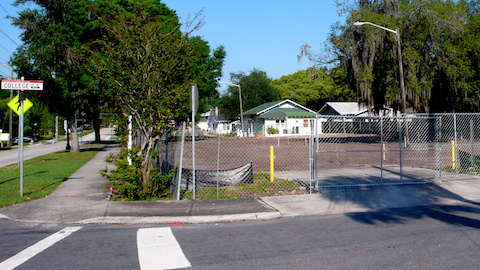
The photo above was first one taken. We'll be sure to publish one taken from the same location when the house is finally ready for its close-ups. Thanks to all of you who have been "walking along" with us.
Here's a brief summary of our improvements: whenever possible, videos have been re-mastered to play in high definition, and some have been re-edited to tell the story better; a lot of "tidying up" throughout the site to make things easier to find and explore; and we've loaded all of the 2011 blog-entry headlines right here on the home page sidebar. The "live blog goes back to January 2012.
Please take a thorough look and make sure you refresh the site to avoid visiting a cached version, and if you find a failure or a flaw, please let us know. A lot of people who haven't been watching all of this unfold will be dropping by to see how it happened. We'd like to make that an excellent experience.
By Michael Maguire | October 16, 2013 at 11:42 PM EDT | No Comments
The tangible fundamentals of Wright's Usonian houses are of the earth, but he clearly wanted to use them to showcase the most important and ethereal element: light. It's almost as if every detail is destined to capture, reflect, or direct light into the windows of every viewer's soul. See more in the October Gallery.
By Michael Maguire | October 10, 2013 at 08:04 AM EDT | No Comments
The house is now wearing a little protective gear. As the number of workers increases so does the risk of "injury". A tool-belt ding in a door frame could cost a lot of time and money to repair. Stay with us while we watch the frenetic action leading up to the October 31st premiere. See the October Gallery here.
By Michael Maguire | October 03, 2013 at 10:21 AM EDT | 1 comment
All of the crafts and trades were aboard today, sawing, nailing, fitting, digging, pumping, drilling, etc! The deadline for its debut, October 31st, is pushing the work and workers forward at a full but deliberate pace. Check the video here and see more photos in the October Gallery.
By Michael Maguire | September 30, 2013 at 11:12 PM EDT | No Comments
Eight striking colors, nine extremely precise geometric shapes, and nearly 5,000 perforations to fill mean that Ken Berman and his crew will be on the site as much as possible during the final stages of construction. Lakeland is home to Berman's stained glass studio, The Glass Onion, so his commute is an easy one. However, he will have to travel halfway across the state to meet Ron Bearer who fabricated the inserts. Ron considers the delicate "L"-shaped ones too fragile to ship via normal carriers, and so will meet Ken in the middle to make sure they arrive safely. See more in the September Gallery and of course throughout October.
By Michael Maguire | September 19, 2013 at 04:02 PM EDT | No Comments
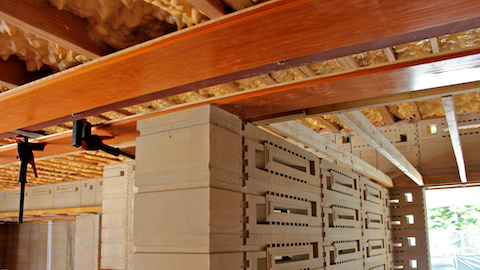
The work continues apace and details from the drawings are becoming real, three-dimensional components. This is truly a hand-made house, and while the blocks tend to define it, the wood is warming it up and refining it into Wright's vision and into the essential Usonian construct. See more in the September Gallery.
By Michael Maguire | September 04, 2013 at 12:01 PM EDT | No Comments
The experts at DeMoss are hard at it now, milling, shaping, fitting, finishing, and installing. The ceilings are nearly complete and work has begun on the door jambs. Doors and built-ins and window frames are all on the punch list and the saw dust is flying! See more in the September Gallery.
By Michael Maguire | August 29, 2013 at 11:43 AM EDT | No Comments
The ceiling planks move smoothly from the interior to the exterior, almost as if the walls weren't even there. The precise alignment and continuity are crucial to the successful realization of Wright's design. See much more in the August Gallery. Work on the gift shop bungalow, the parking lot and the grounds.
By Michael Maguire | August 18, 2013 at 08:50 AM EDT | No Comments
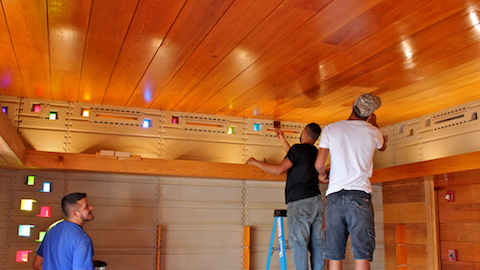
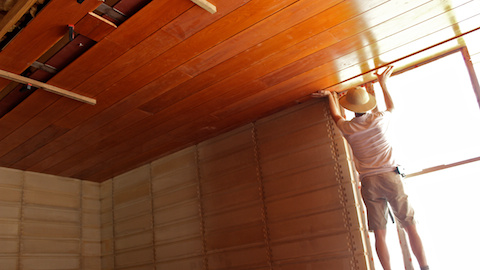
It doesn't have to just be right, it has to be "Wright". Tom Sharrett works to ensure that all of the ceiling planks line up and match the grid system that characterizes the Usonian design. Like most aspects of the house, the work is proceeding deliberately, but once a part is installed, that's it! Done and done. More to come, and more to see in the August Gallery.
By Michael Maguire | August 14, 2013 at 08:21 PM EDT | 1 comment
Tom Sharrett and an assistant got back into the house today and started putting the ceiling boards into place. Made of the same southern Cypress as the roof trim, the planks have a warm natural glow and an obvious precision, cut to conform to Wright's design. See more as the work moves forward by visiting the August Gallery regularly.
By Michael Maguire | July 10, 2013 at 07:23 PM EDT | No Comments
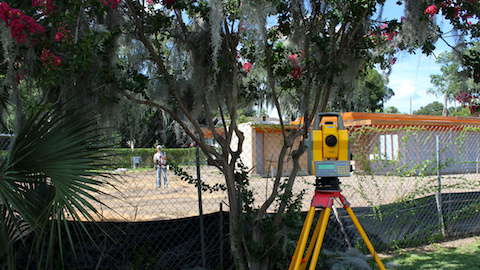
Activity is picking up as the Usonian grounds are surveyed, cleared, and contoured. Click here to look back at a photo from May of 2011 that shows the surveyor's marker that was being used today. Click here for a look at the video. As the area gets cleaned up it becomes easier to see how the house sits on the lot and will be seen by passersby. See the July Gallery here.
By Michael Maguire | June 06, 2013 at 11:16 AM EDT | No Comments
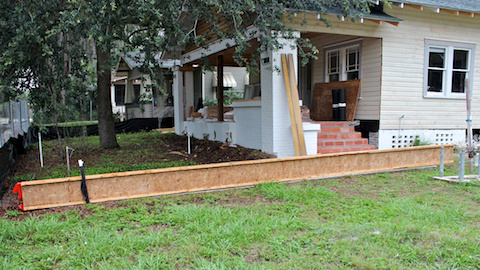
Sorry about that. It was a little too irresistible. But the carpenters are happy to be working on the bungalow. The beam will be installed across the front, resting on the two corner pillars, creating a wide open invitation to enter. The house is being expanded to accommodate visitors with restrooms, refreshments, and a gift shop. See it all in the June Gallery.
By Michael Maguire | May 31, 2013 at 02:04 PM EDT | No Comments
Work continues on "the little green house" which will soon be more like brown or tan. The intent is to restore it to the proper condition of its original era. Authentic style wood siding is being installed and you can see some craftsman-like details emerging in the window framing. See the May Gallery here.
By Michael Maguire | April 24, 2013 at 08:22 AM EDT | No Comments
What we've been referring to as "the little green house" is being fitted with temporary siding across it's eastern face, while carpenters remove the worn, original siding from the rest. The whole house will be covered in new, historically correct, board siding. The restored bungalow will house the restrooms, gift shop, and refreshment area for visitors to the Sharp Family Tourism and Education Center - the Usonian House. Nice weather means it's nice to work outside. See more in the April Gallery.
By Michael Maguire | April 08, 2013 at 08:43 AM EDT | No Comments
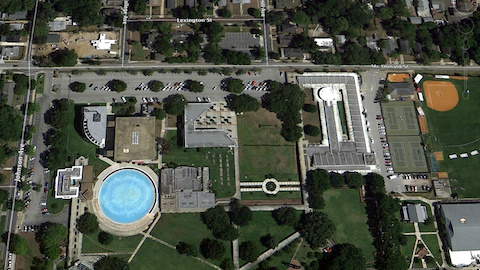
Street views are updated only occasionally, but the satellites are snapping away and a recent project for students at Florida Southern uncovered this image. The Usonian house is in the upper left corner and is shown with the roof completed. The view also shows the water dome in operation, a lucky shot, because it only runs on a limited schedule. Nice work, Google!
By Michael Maguire | February 17, 2013 at 02:40 AM EST | No Comments
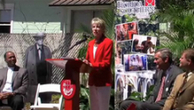
Jeff Baker addresses members of the Frank Lloyd Wright Building Conservancy during their tour of Florida Southern College on Saturday. The group was treated to a detailed history of the school's architectural planning and development, close-up inspection of Wright's original western campus structures, and a peek inside the Usonian house.
By Michael Maguire | October 22, 2012 at 02:43 PM EDT | 1 comment
The soffitt and fascia are done!
There's a little blue tape to remove along the cypress boards, which the roofers will probably do this week. They used it to protect the wood while they were creating the final seal along the edges. Next up, interior fitments, doors and windows, and built-ins. Stay tuned ... and check the October Gallery for more pictures.
By Michael Maguire | September 28, 2012 at 09:42 AM EDT | No Comments
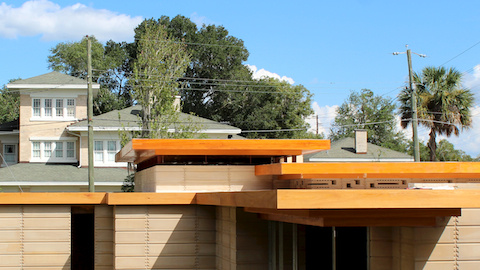
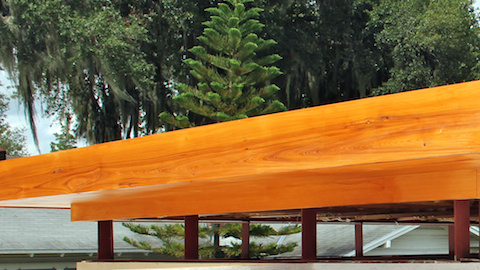
The rainy days have given way to an abundance of sunshine, and even though the leaves are starting to change in cooler climes, it's still the dead of summer here and hot! The Sharretts are making their way around the roof line, and Wright's vision of how it would be seen from eye-level at the street is coming into view.
By Michael Maguire | September 16, 2012 at 08:16 AM EDT | No Comments
While the roof workers were pressure cleaning the roof we got a chance to see a nifty design feature that we weren't expecting: the roof drain that sits over the planter at the southeast corner of the house. No need for a watering can in the rainy season, eh? See more in the September Gallery.
By Michael Maguire | September 06, 2012 at 07:36 AM EDT | No Comments
Summertime in Florida is hardly the best construction season, and the carpenters - more like furniture makers - have to make the best of any opportunity to work in dry, sunny conditions. On Wednesday, that only lasted half a day, as usual. But as with the blocks, once the beautiful cypress is installed, it's done. No painting or decorating needed, so each new board adds a "finishing touch" as soon as it is put into place. See more in the September Gallery.
By Michael Maguire | August 14, 2012 at 12:05 AM EDT | No Comments
Board by handcrafted board, the cypress finishing lumber is being installed, as fascia, soffitt and, as seen here, as a ceiling for the carport. The fine woodworking will continue until the house is complete because it will comprise all of the rest of the major work, including window and door frames, built-ins, shelving, and lighting recesses. See more detail in the August Gallery.
By Michael Maguire | July 20, 2012 at 10:08 AM EDT | No Comments
The Sharrets have installed all of the soffit and fascia on the "high" roof and are making progress on the "middle" roof. It's not hard to imagine the difficulty of working with masonry in the rainy season, so add a couple of degrees for wood work! Lots of details on the July Gallery.
By Michael Maguire | July 18, 2012 at 11:28 AM EDT | No Comments
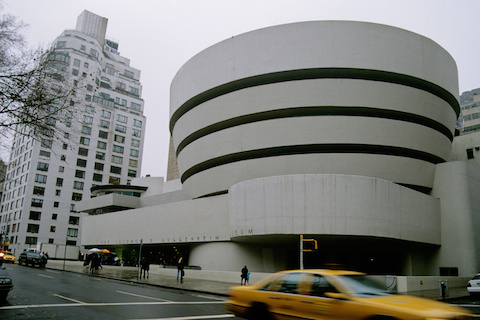
From July 27, 2012, to February 13, 2013, the Sackler Center for Arts Education at the Guggenheim Museum will present A Long-Awaited Tribute: Frank Lloyd Wright’s Usonian House and Pavilion.
By Michael Maguire | July 05, 2012 at 11:45 AM EDT | No Comments
We met the Sharretts today as they prepared to work with the first of many loads of Florida and Louisiana cypress that will be used for soffit, fascia, furniture, cabinets, windows, doors, and ceilings. See a little more in the July Gallery.
By Michael Maguire | June 15, 2012 at 12:43 PM EDT | 2 comments
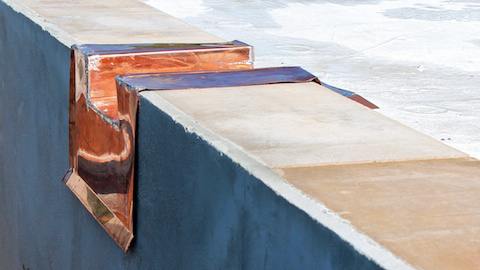
The house's "flat" roof is really a lot like a shower drain, and each of the three levels is designed to move the rainfall toward copper scuppers (being installed today), that will drop it into a copper "tub" inside the chimney structure. A drain there drops it into a pipe that moves it under the house and into the local drainage system. See more in the June Gallery. You'll also find a tantalizing hint of what's to come for the fascia and soffit.
By Michael Maguire | June 12, 2012 at 09:21 AM EDT | No Comments
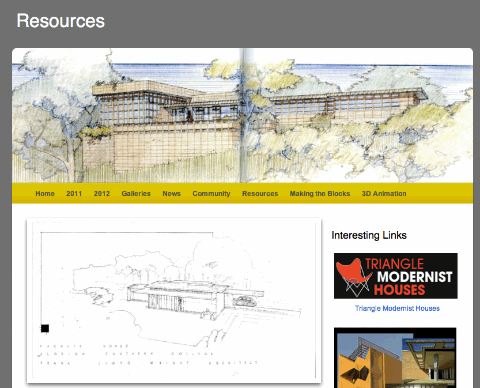
Prompted by a question from a blog reader, we have updated our "Resources" page with plan and elevation drawings, and a note from Jeff Baker regarding the original site plan and its history. Click here to go there, and here for the blog entry comment.
... more Wright stuff
Artsy features the world’s leading galleries, museum collections, foundations, artist estates, art fairs, and benefit auctions, all in one place. Our growing database of 250,000 images of art, architecture, and design by 40,000 artists spans historical, modern, and contemporary works, and includes the largest online database of contemporary art. Artsy is used by art lovers, museum-goers, patrons, collectors, students, and educators to discover, learn about, and collect art.
More than 50,000 people from 155 countries have visited the site nearly 68,000 times and racked up more than 153,000
page views.
We are re-telling the story of the project on our facebook page. If you "Like" it, you'll always know what's what as soon as we do!
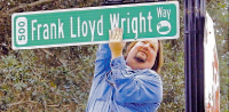
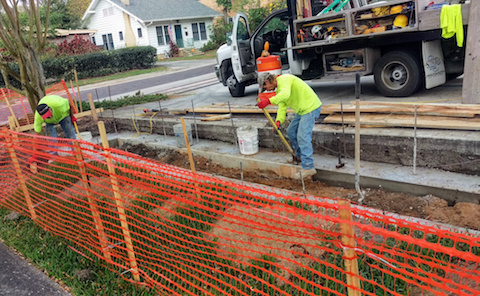
Traffic Operations sign technician Gary Griffith installs one of the new Frank Lloyd Wright Way street signs at Success Avenue and the former McDonald Street. The address of the house itself is now:
Our Video makeover is complete! Choose the main Video page, or any of the "year" pages to watch all of the project action in full HD. Also seeThe Blocks, The Glass, The Wood, The Fountain, and3D Animationin crisp, clear high defintion.
With so much happening at once during the final month, we thought you might find it helpful to have these links to our most recent blog posts. Just click the headline to go directly to the post.
The Premiere of the historic Frank Lloyd Wright Usonian House took place October 31st. Dignitaries from the city, the county, and the college joined the donors, craftsmen, and professionals who made it all possible.
Watchour interview with Ken Berman who installed the glass inserts, and see how all of the 10,000 board feet of southern cypress was turned into ceilings, walls, shelves, and doors.
Take a look at the last frenetic month in theOctober Gallery.
On May 20, 2010, Dr. Anne Kerr announced Florida Southern College's plans to construct a Frank Lloyd Wright-designed "Usonian House" which will serve as a new education and tourism center.
Click here for a slideshow of the announcement posted on flickr in the fsc.mocs photostream.
The site of Florida Southern College's latest addition to its Frank Lloyd Wright collection - the largest in the world in a single location - is on McDonald Street between Johnson and College Avenues in one of Lakeland, Florida's oldest historic neighborhoods.
2011 Headlines
Click an item to read the blog entry * Denotes entries with comments

 Al Garcia, a producer with Polk County TV has just released his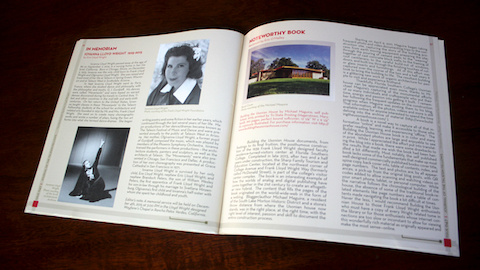
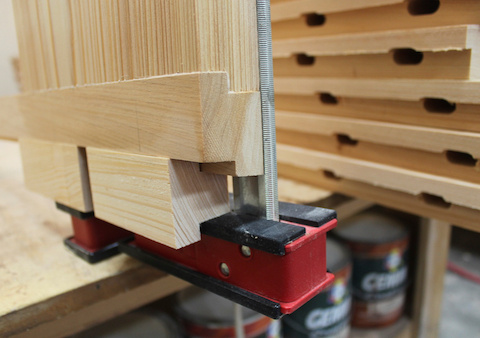
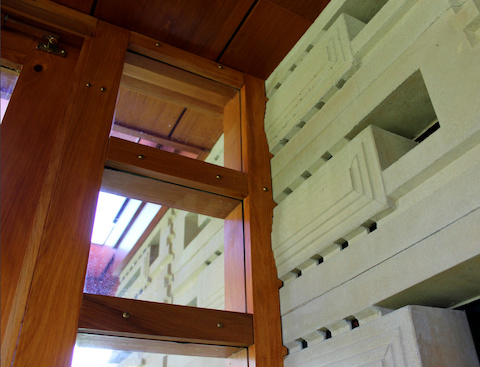 Well, no, of course. It's neither rubber nor road, but the principle is the same here, where the cypress meets the blocks. Where the rubber does meet the road is where the reality of a concept is proven and the test truly begins. In the case of the Usonian House, these delicately and precisely cut window moldings are made to meet the complex geometric relief patterns of the delicately and precisely fabricated concrete blocks that form the identity of the house. Nothing less than perfection could succeed. Next time you're there, give it a moment.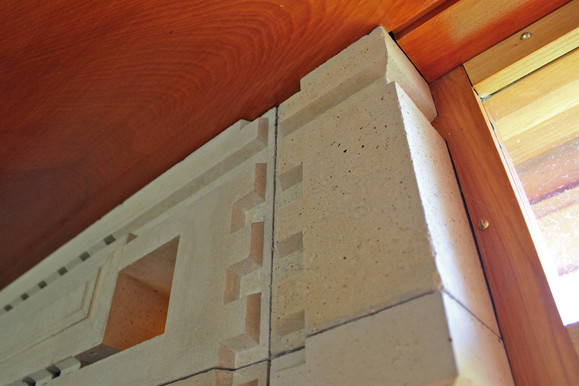
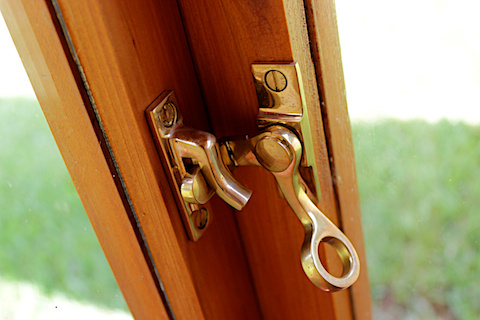 ... don't they?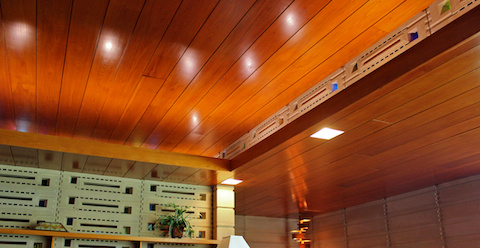
 Please pardon a brief building-the-Usonian-House-project timeout for news of a buildingtheusonianhouse.com update. As we approach the "premiere" of this amazing undertaking, we thought it would serve us all to refresh and re-construct this site to take advantage of improved technology and experience gained over the course of two-and-a-half years as a "sidewalk superintendent".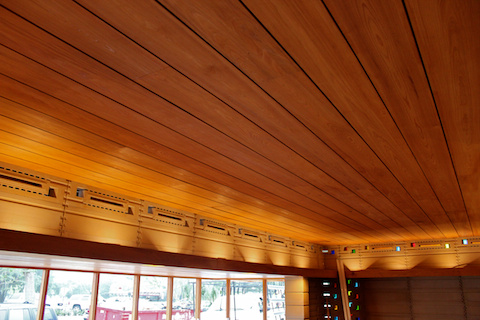





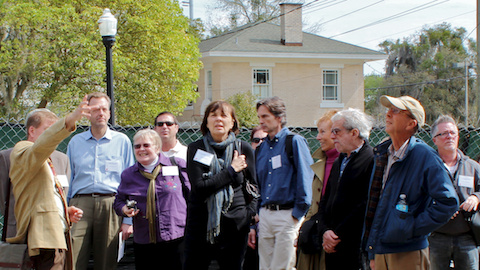 Jeff Baker addresses members of the Frank Lloyd Wright Building Conservancy during their tour of Florida Southern College on Saturday. The group was treated to a detailed history of the school's architectural planning and development, close-up inspection of Wright's original western campus structures, and a peek inside the Usonian house.